I am a Physical Science Research Scientist at Stanford University as part of the atmospheric dynamics, variability, and change group led by Aditi Sheshadri. My research focuses on understanding the multi-scale dynamical interactions that shape the global atmospheric circulation and its variability, and how such interactions evolve in a changing climate. I address this using a combination of high-dimensional data analysis, mathematical modeling, numerical climate modeling, and modern advances in machine learning.
Prior to this, I worked at the Ludwig Maximilian University of Munich (LMU) where I investigated the role of wave dynamics in shaping the midlatitude stratospheric circulation, with Thomas Birner and in collaboration with the German Aerospace Center (DLR).
I received my Ph.D. from the Courant Institute of Mathematical Sciences, New York University, where, motivated by uncertainties in the Antarctic ozone hole recovery projections, I assessed stratospheric dynamics, stratosphere-troposphere coupling, and tracer transport in climate model dynamical cores. I was advised by Edwin P. Gerber.
I am currently working on evaluating and improving global and monsoon-time predictability in AI weather models, and on the development of machine learning-aided parameterizations and couplers for atmospheric gravity waves within the ML-enhanced CESM hybrid model.
Email: I can be reached at : ag4680 |at| stanford |dot| edu, or ag4680 [at] nyu [dot] edu
When it comes to photography, I am pretty much a monkey with a camera, but I love clicking clouds. The header image changes upon each refresh and the webpage randomly picks one of the nature photos I have clicked (mostly clouds). Gravity waves and orographic lifting too can be spotted in some!
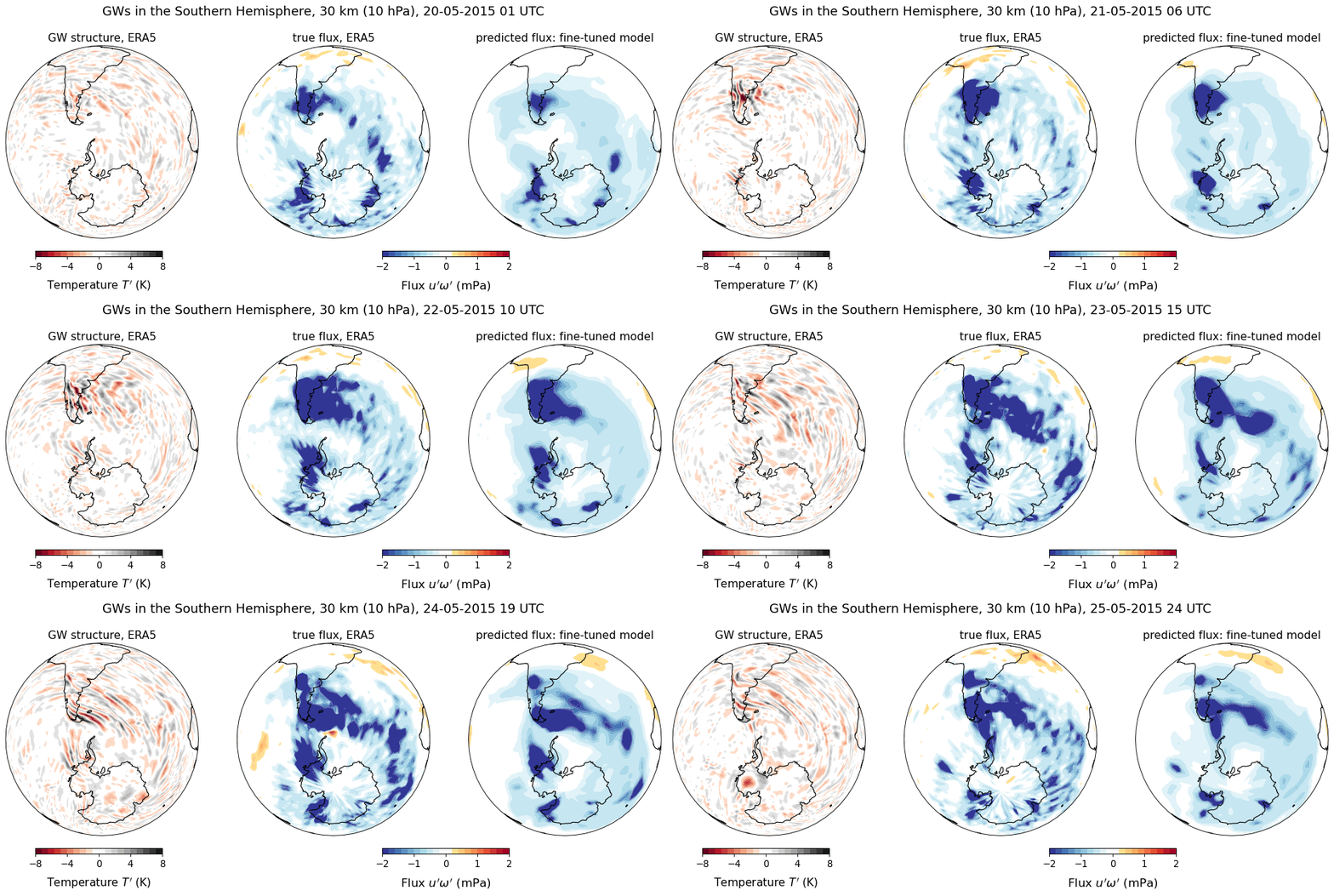
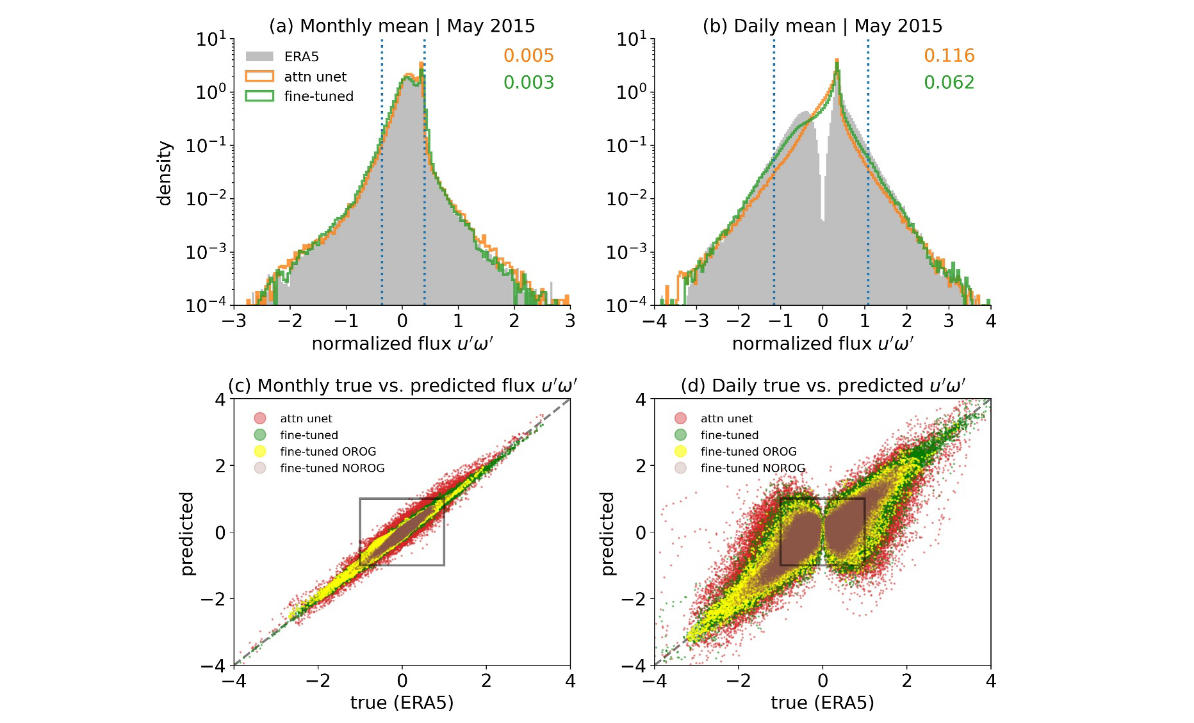
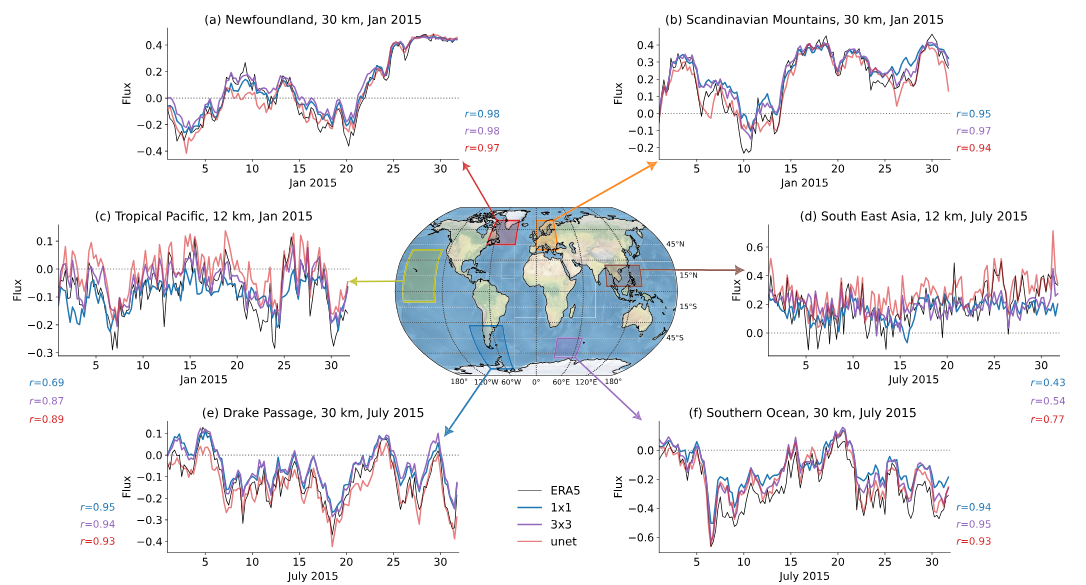
Figure: ERA5 reanalysis vs. predicted gravity wave momentum fluxes around Drake Passage during late May 2015 using a global AI flux predictor developed by fine-tuning Prithvi WxC - a large AI foundation model for weather and climate. Climate models typically fail to resolve atmospheric variability at scales shorter than ~a hundred kilometers. ML can help bridge this prevailing gray-zone gap by learning the "missing physics" from high-resolution models (in this case ERA5 reanalysis) and then representing it in coarser-climate models. The fine-tuned model skillfully captures the lateral propagation of GW packets over the Southern Ocean. Foundation models are highly versatile and can be used to accomplish a range of weather and climate downstream tasks. Read more about Prithvi WxC here.
Research
Please refer to my CV and my Google Scholar profile for details. Please contact me for access to any of my publications behind a paywall.
Machine Learning for Weather & Climate Modeling
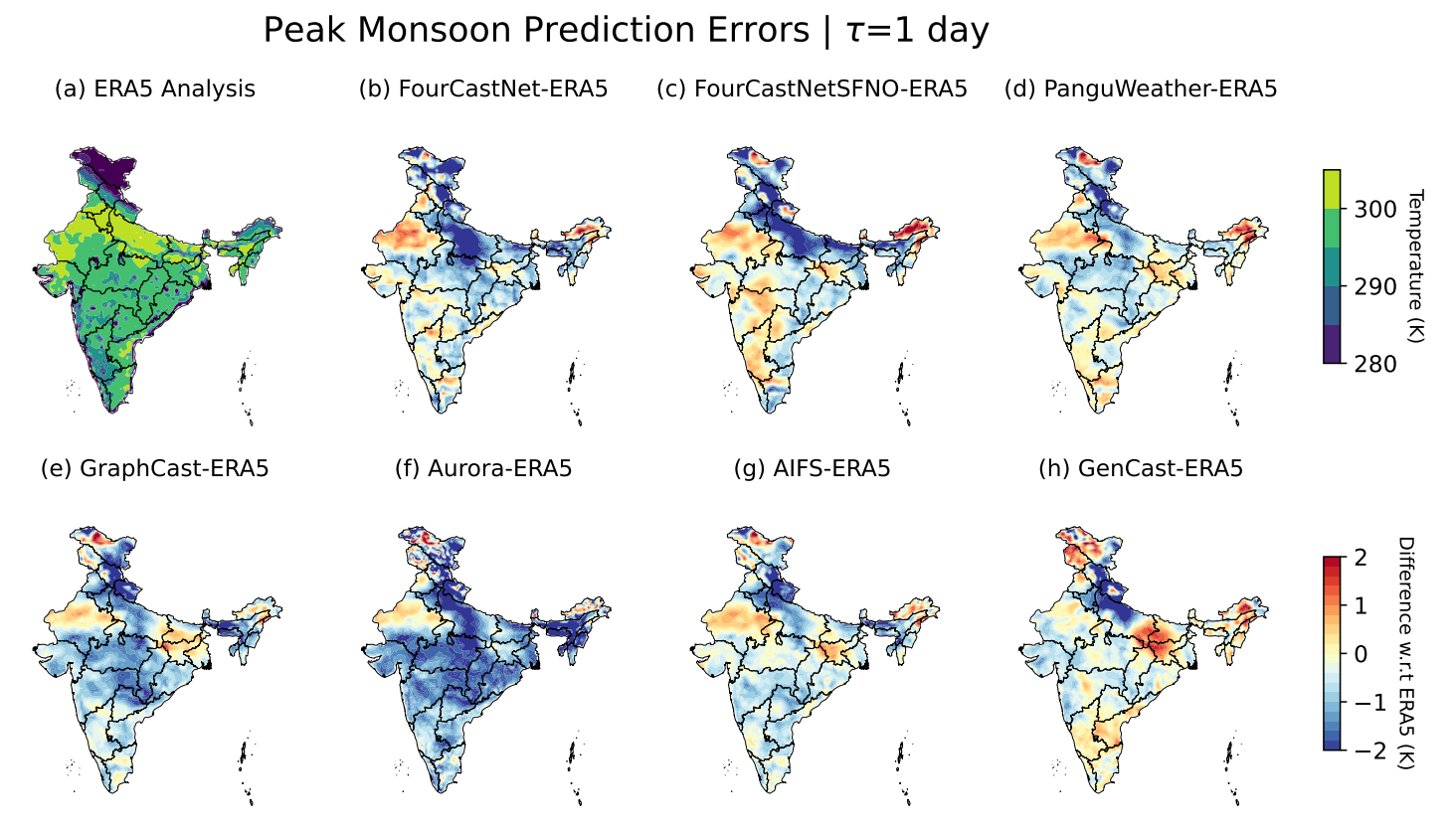
MAUSAM: AI Weather Prediction Benchmarking Against Observations for the South Asian Monsoon.
We evaluate seven leading AI weather models (FourCastNet, Pangu-Weather, GraphCast, Aurora, AIFS, GenCast, and more) against ground stations, rain gauges, and geostationary satellites during the South Asian Monsoon, rather than against reanalysis. The models are impressively skillful at large scales, but errors against real observations run 15–45% larger than reanalysis-based scores suggest, with clear gaps in extreme rainfall, cyclone tracks, and the mesoscale energy spectrum, exposing their shortcomings for operational weather forecasting, monsoon precipitation prediction, and S2S forecasting.
[pre-print] [slides]
Finetuning AI Foundation Models to Develop Climate Model Parameterizations.
Using gravity waves as a test case, we show that foundation models like Prithvi WxC and Aurora can be finetuned to emulate a subgrid process they never saw during pretraining. The resulting parameterization beats purpose-built data-driven baselines while being cheaper to train and more generalizable, opening a path to reusing one foundation model for many missing processes in climate models.
[paper]
Nonlocal Deep Learning Parameterization for Atmospheric Gravity Waves.
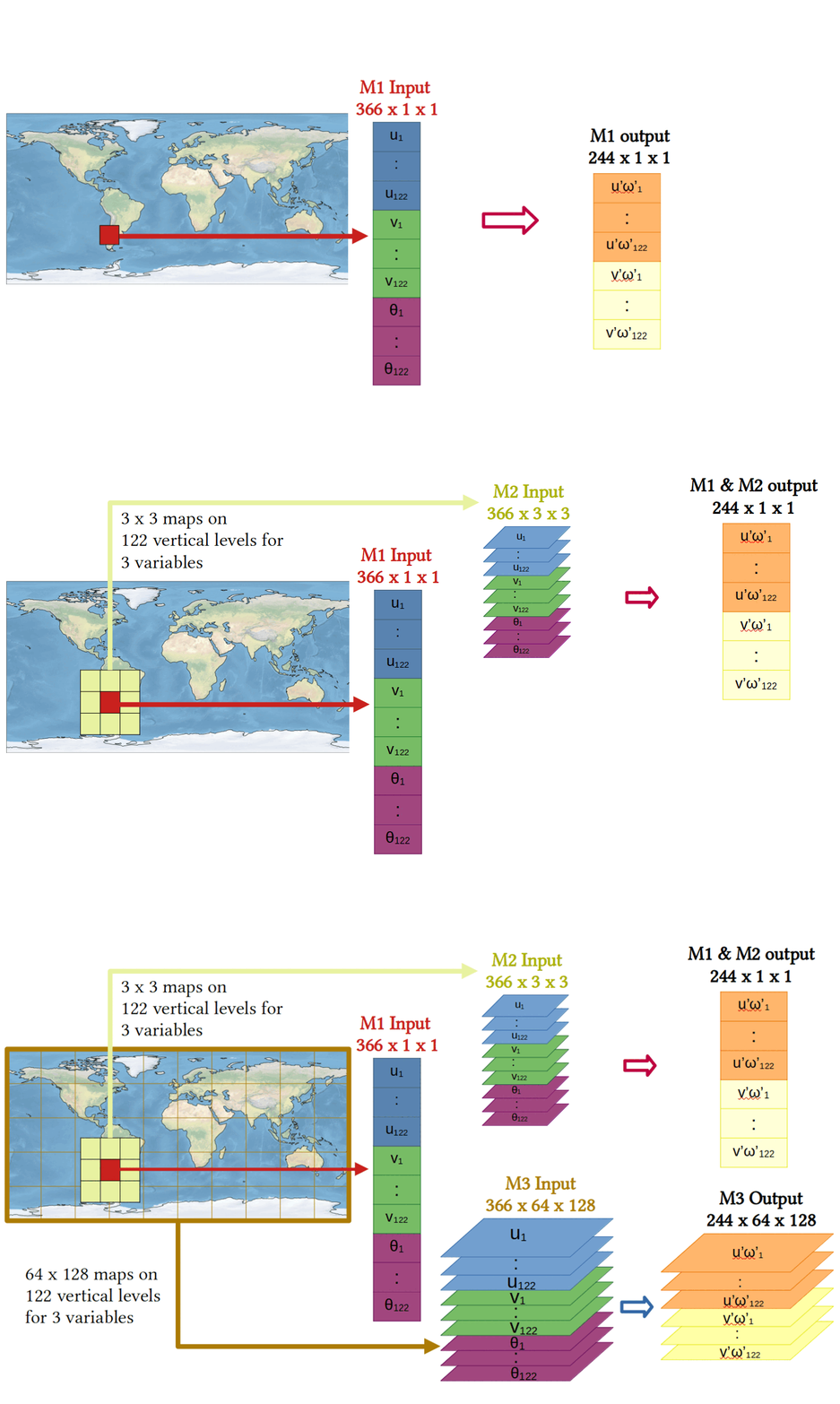
We build a hierarchy of deep learning gravity wave parameterizations, from strictly single-column networks to models that see progressively wider neighborhoods. The most nonlocal architecture wins on both instantaneous predictions and seasonal averages, showing that data-driven schemes work best when they are allowed to encode horizontal wave propagation instead of the columnar assumption of traditional schemes.
[paper] [slides]
Prithvi WxC: A Foundation Model for Weather and Climate Applications.
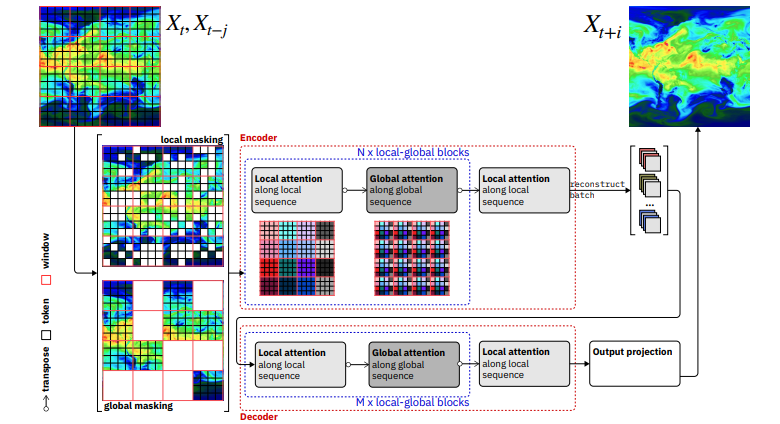
With NASA and IBM Research, we developed Prithvi WxC, an open 2.3-billion-parameter foundation model trained on MERRA-2 that adapts to many downstream tasks: forecasting, downscaling, hurricane track and intensity prediction, weather analog search, and emulating subgrid physics. Our gravity wave finetuning was among its first demonstrations that a general atmospheric model can be repurposed to improve climate model physics.
[paper]
ICML'24 paper on machine learning representation of mesoscale gravity waves.
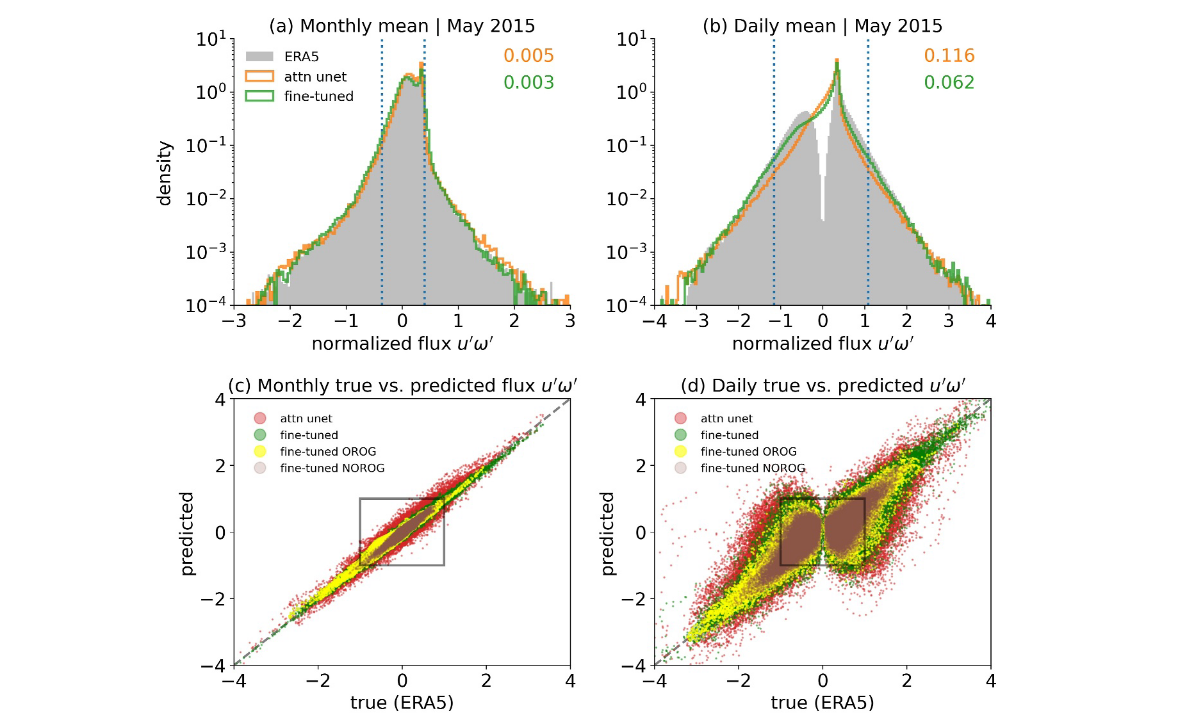
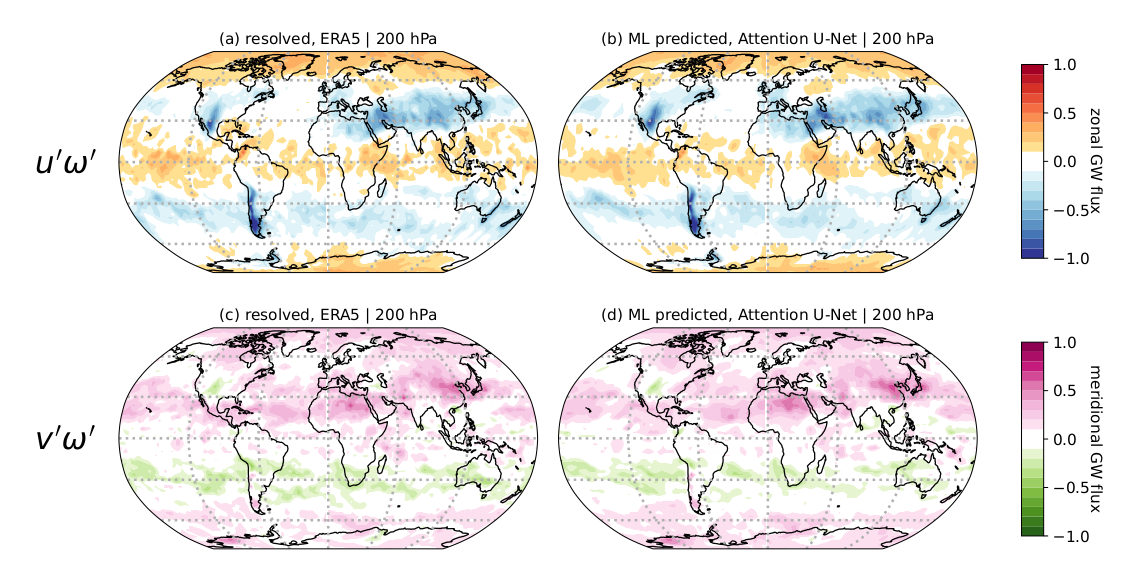
Large AI models are demonstrably good at simulating the large-scale atmospheric evolution but struggle with small-scales. In this paper, we show how deep learning models can be effectively used to generate flux predictors for small-scale processes using a hierarchy of modeling architectures: from single-column ANNs to regionally nonlocal ANNs to global Attention U-Net CNNs. The proof-of-concept indicates that data-driven parameterization can be effectively used to represent mesoscale dynamical processes in climate models.
[paper] [blog]
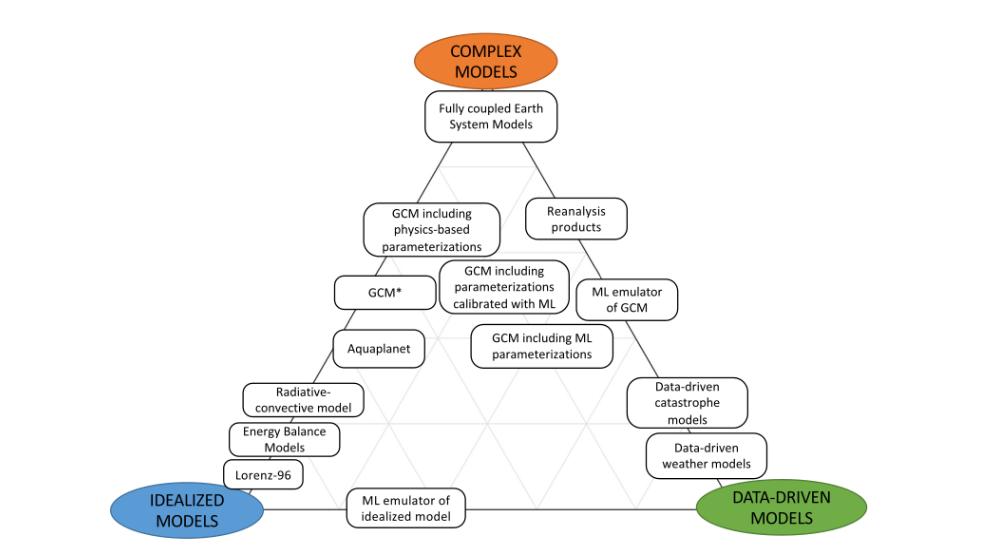
Where does ML fit in the existing climate model hierarchy?
This review argues that machine learning does not fit into the traditional model hierarchy as a new rung, but rather adds an independent axis, spanning data-driven parameterizations, emulators, equation discovery, and end-to-end forecasting. We survey how ML is reshaping climate modeling and where it can contribute next, including climate risk assessment.
[paper]
Atmospheric Gravity Waves and the Global Circulation
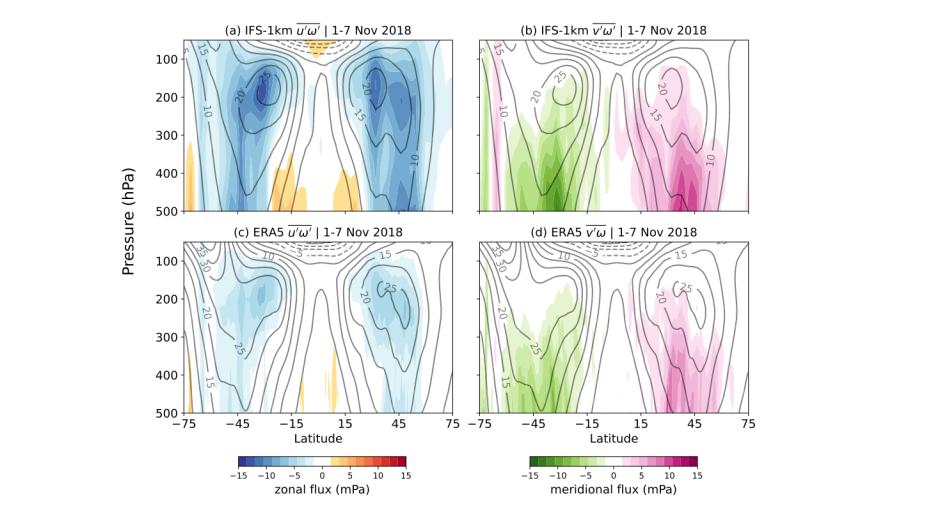
A computationally tractable method to compute small-scale momentum fluxes using Helmholtz decomposition.
Using existing Python spherical harmonics packages out-of-the-box to compute small-scale momentum fluxes from a kilometer-scale global climate model, using Helmholtz decomposition, takes roughly 600 calendar days (on a typical supercomputer with limited node allocation). We optimized the workflow and reduced it to just 15! The fluxes are now publicly available for anyone to use.
[paper] [dataset]

Does horizontal propagation of gravity waves matter for midltitude stratospheric circulation? Yes, here's a quantitative evaluation.
Using 44 years of ERA5, we built the first climatology of lateral gravity wave momentum fluxes in the extratropical stratosphere and quantified their contribution to the zonal wind forcing. The horizontal component is not negligible, so parameterizations that assume purely vertical propagation systematically misplace where and how strongly waves force the circulation.
[paper] [slides]
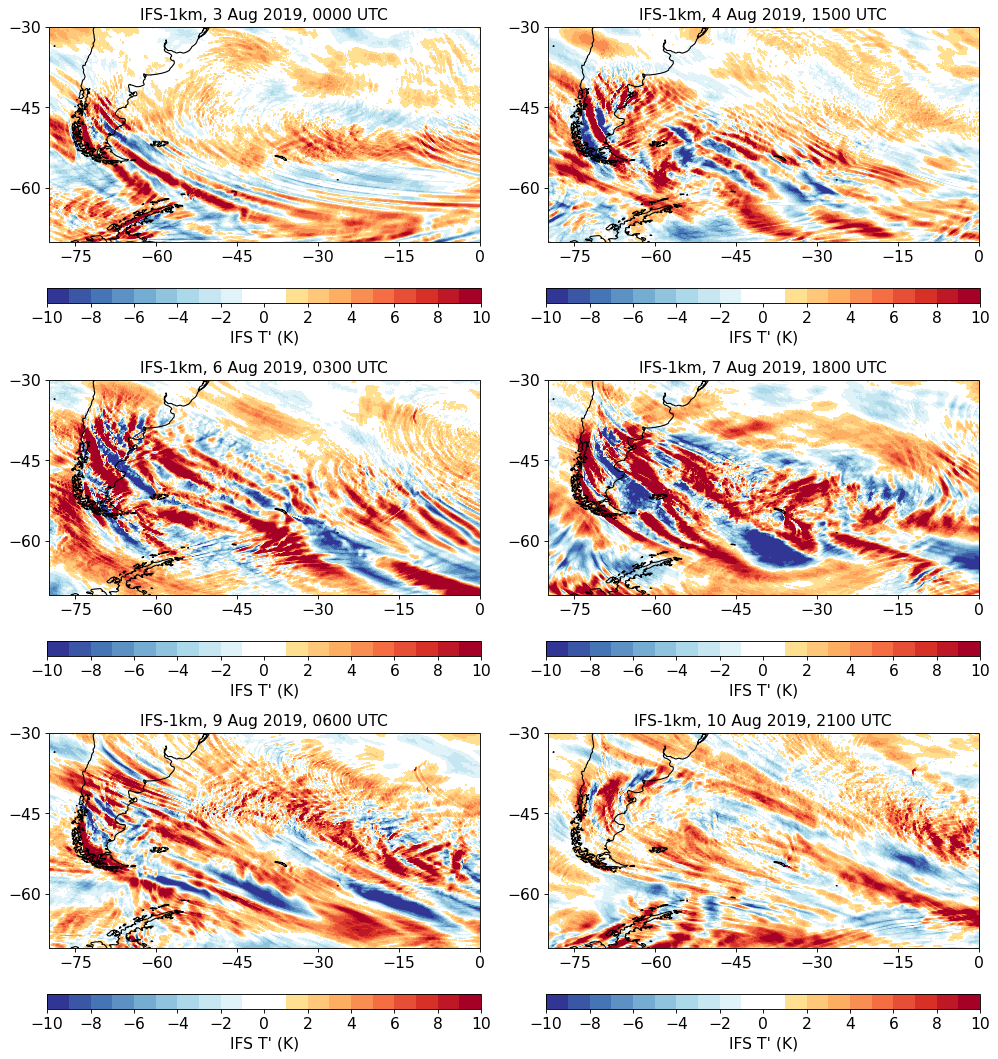
Estimating gravity wave momentum fluxes in the Southern Hemisphere
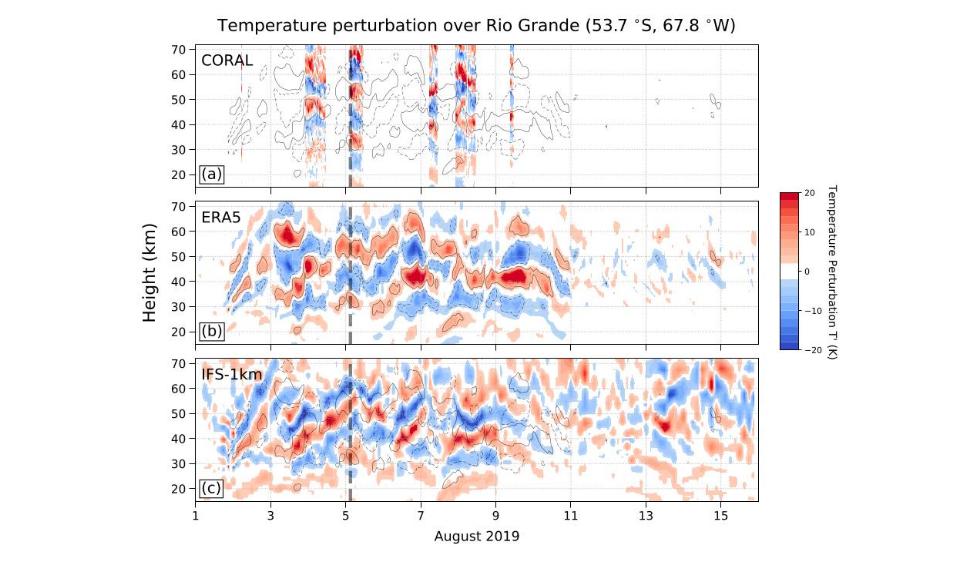
We blended Rayleigh lidar observations, ERA5, an unprecedented 1.4 km global ECMWF IFS run, and a coarse chemistry-climate model for a strong Andean wave event in August 2019. The kilometer-scale model resolves fluxes 2–2.5 times stronger than ERA5 yet still underestimates the waves seen by lidar, while parameterized fluxes are excessive poleward of 60°S, giving concrete benchmarks for the next generation of gravity wave schemes.
[paper] [poster] [blog]
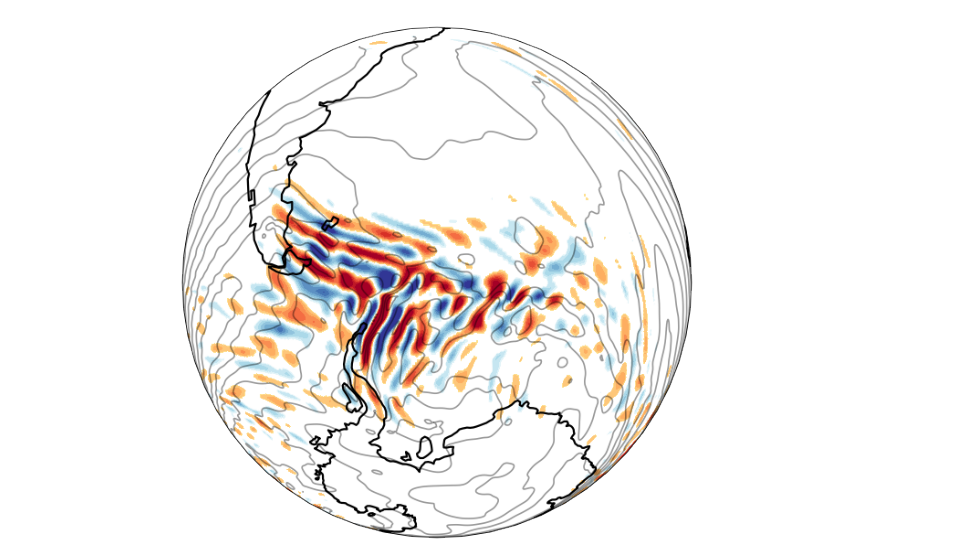
Importance of gravity waves for springtime stratospheric circulation
Leveraging ERA5's ability to resolve a broad gravity wave spectrum, we quantified the momentum forcing these waves exert during the springtime Antarctic vortex breakdown. Gravity waves supply a large share of the deceleration needed to slow the vortex, pointing to inadequate gravity wave forcing as a root of the persistent "cold-pole" bias in climate models.
[paper] [slides]
Stratosphere-Troposphere Coupling and Trace Gas Transport
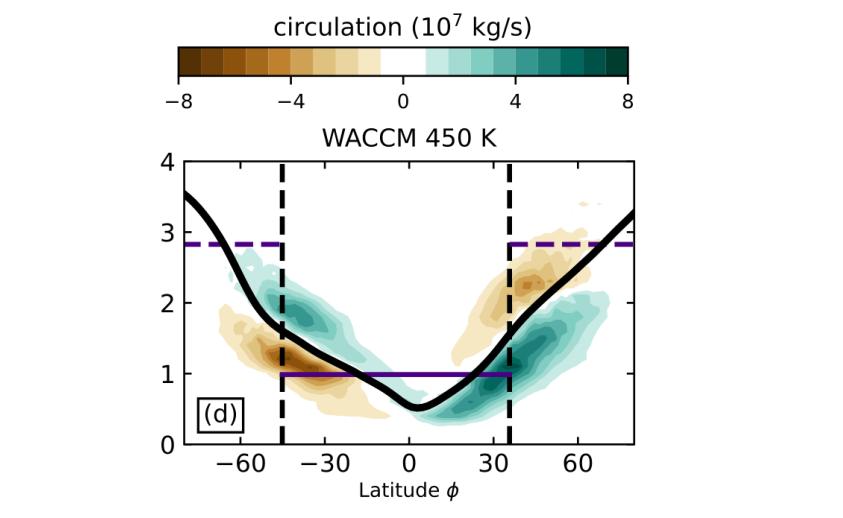
Deep tropics isolated from wave mixing
We introduce a Γ–θ streamfunction in age–potential temperature that reveals the full distribution of age-of-air for parcels exchanged across any latitude and isentrope. It shows that existing theory, which assumes perfectly mixed tropical and extratropical reservoirs, underestimates wave-driven mixing fluxes by up to 50% in the lower and middle stratosphere.
[paper]
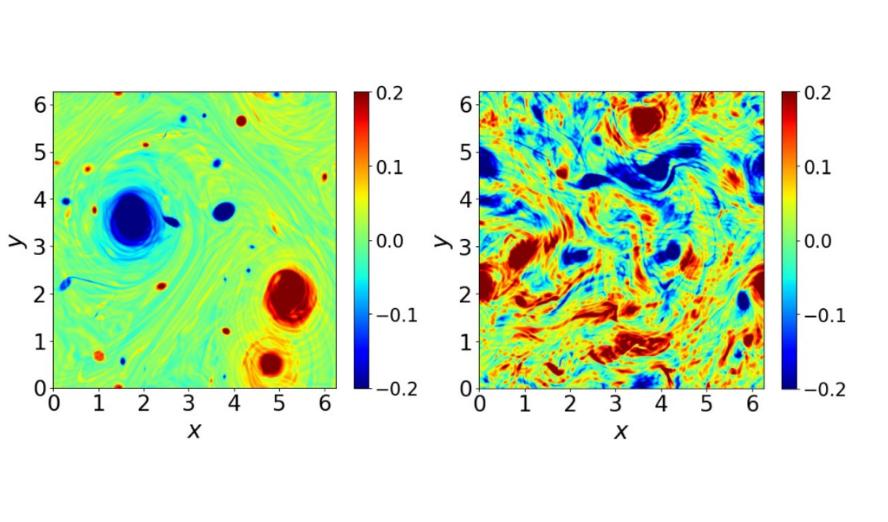
Wave-enhanced Tracer Dispersion
Internal gravity waves are usually considered poor at stirring ocean tracers, but in idealized barotropic simulations we compare tracer dispersion in wave-dominated versus quasi-geostrophic turbulent regimes. Wave-dominated flows stir and mix tracers far more rapidly, because waves modify the balanced flow and generate energetic small-scale structures that boost turbulent diffusivity, revealing an indirect but potent role for waves in ocean mixing.
[paper]
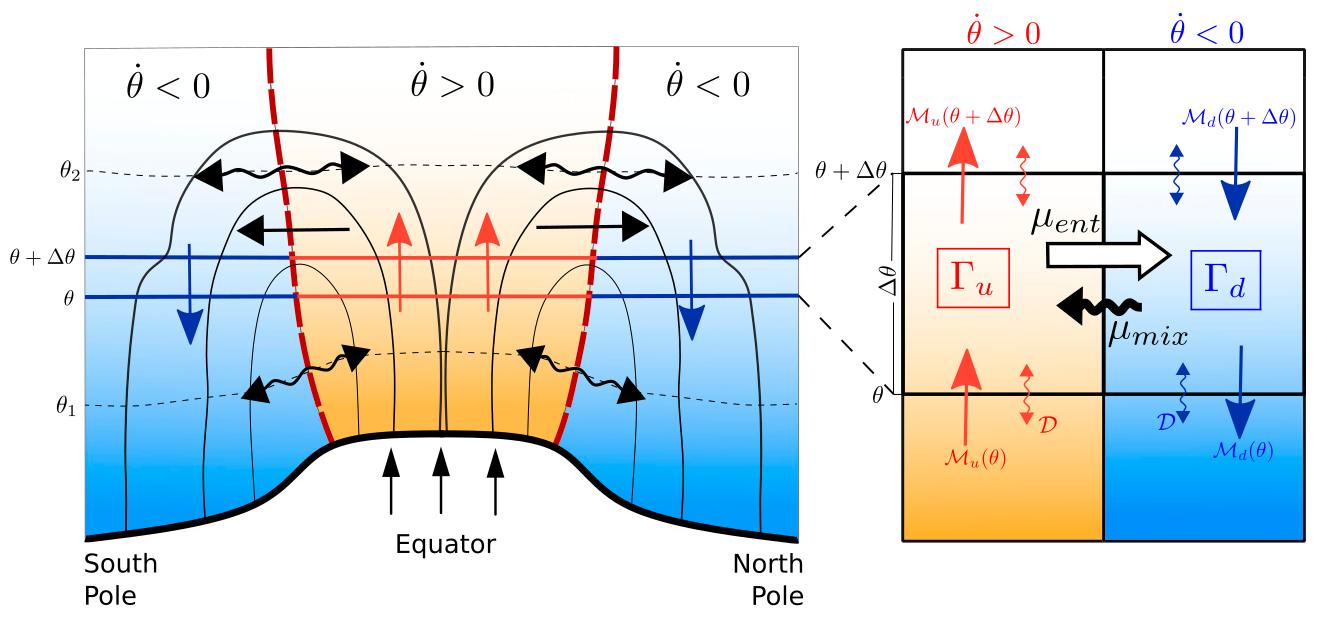
Understanding trace gas transport differences among climate models
In this work, we fit a one-dimensional tropical leaky-pipe model to each dynamical core to separate the roles of the overturning circulation, isentropic mixing, and numerical diffusion in the intermodel spread of age-of-air. The spread traces mainly to persistent differences in tropical circulation and mixing that do not vanish at high resolution, so model numerics leave a lasting fingerprint on ozone-relevant transport.
[paper] [slides]
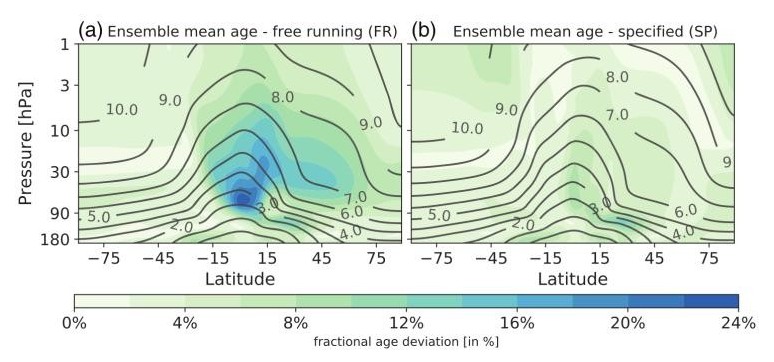
How robust is trace gas transport representation in state-of-the-art climate models?
We proposed a climate model intercomparison test built on the age-of-air tracer to isolate transport by a dynamical core from chemistry and physics, and applied it to four cores with different numerics and grids. The cores disagreed sharply on tropical stratospheric winds, some producing westerly jets and others easterly, biasing age-of-air by up to 25% and showing that numerics alone can drive substantial transport spread.
[paper] [slides]
News & Miscellaneous Links
-
(September 2024) Excited to share the release of NASA and IBM's Prithvi WxC - an AI foundation model for weather and climate application trained on NASA MERRA2 - is now available on Hugging Face [paper] [blog1] [blog2] [media]. We leveraged it to develop a data-driven climate model parameterization for atmospheric gravity waves. Interestingly, not only was training the finetuned model cheaper, but using the encoder-decoder from Prithvi made the model more accurate and more generalizable, leading us to believe that large AI models can be effectively used to improve process representation (precipitation, clouds, radiation, etc.) in global climate models.
-
(May 2024) Prithvi-Weather-Climate: the efforts to build the first multi-modal open foundation model, jointly with NASA, IBM, ORNL, and CSU, over the past several months, have shaped up well. Glad to be a part of this amazing team. Click here to learn more about Prithvi-WxC, and what makes it special.
-
(Jul 2023) In June 2023, I delivered a set of four lectures on "Machine Learning Methods in Atmosphere, Ocean, and Climate Science" at an atmosphere, ocean, and climate science workshop organised at the International Centre for Theoretical Science, TIFR, Bengaluru. These lectures were aimed at introducing undergraduate, graduate and postgraduate researchers to machine learning (ML) methods. If you have wanted to explore the possibilities of ML in your research and would like to start somewhere, I would like to recommend these lectures specially prepared for this. The first lecture discusses the basics of ML, the second and third lectures are hands-on Python tutorials to code neural networks using PyTorch, and the fourth lecture discusses three novel use cases of ML in climate science: data-driven physical parameterizations, equation discovery, and weather forecasting.
[Lecture 1]: Machine Learning Fundamentals
[Lecture 2]: Implementing Artificial Neural Networks in PyTorch | [Jupyter Notebook 1]
[Lecture 3]: Implementing Convolutional Neural Networks in PyTorch | [Jupyter Notebook 2] | [Jupyter Notebooks as HTML]
[Lecture 4]: Machine Learning Applications in Climate Research
-
(Jan 2023) Humanity has a plastic problem. Conventional plastic manufacturing is still cheaper, but the greener alternatives, bioplastics in particular, are catching up fast. Here's a video that highlights some really innovative initiatives to manufacture bioplastics from Avocados, Sugarcanes, Mushrooms, and even Algae! Interestingly, the Sugarcane based bioplastic company featured in the video is based quite close to my hometown of Ghaziabad, India.
- NCAR Command Language (NCL) pressure interpolation script. Update : NCL is being pivoted in favor of Python!
- Scientific Writing : A Pulitzer prizewinner novelist’s tips on how to write a great science paper.
- Peer-Review : A nice article discussing a three-step process to efficiently review a scientific paper.
- SSW animations : Interesting (read cool!) Potential Vorticity (PV) evolution animations for past stratospheric sudden warming (SSW) events.
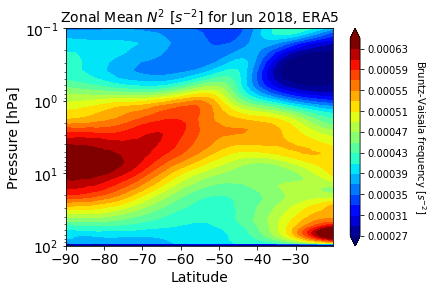
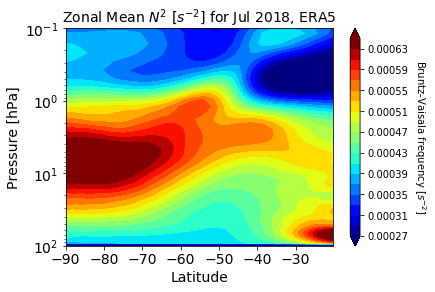
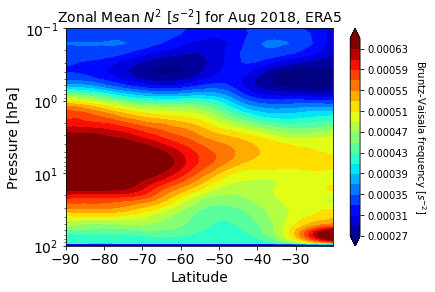
- N2 climatology : Zonal mean Brunt-Vaisala frequency in the southern hemisphere for June, July and August 2018 computed from ERA5 reanalysis. I wanted to check my gravity wave potential energy computations but couldn't find a reliable source online to compare the southern hemisphere climatology for N2. In case you find yourself in a similar situation, your search ends here.
- Linear Algebra Writtens' Workshop: Resources for Fall 2016 Linear Algebra Writtens' Workshop. Click here to view the Math Wiki and solutions to past years' problems.